Overview
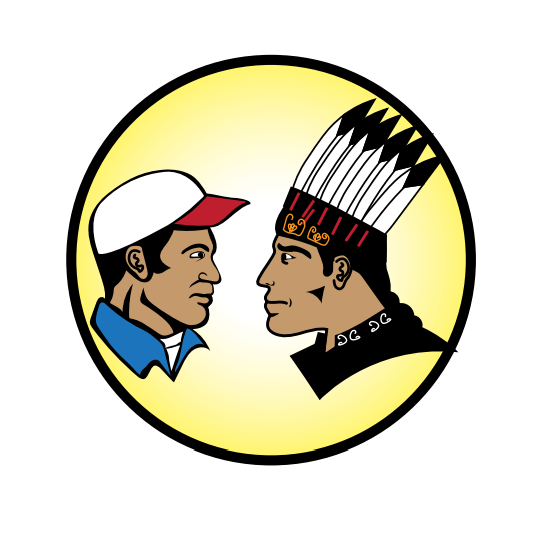
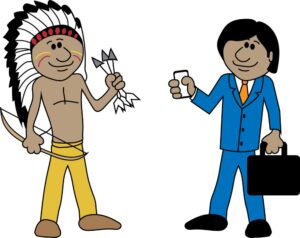
This LE introduces learners to common stereotypes about indigenous people found in media and other areas so that they can better identify them. Learners work their way through a slideshow (provided) which contrasts images that promote stereotypes with images that better reflect reality. Some of the stereotypes learners will encounter cover topics such as: housing, regalia, disease, speech and literacy, diet, education and work.
Learners will...
- Better identify common stereotypes about indigenous people, history and culture.
- Gain awareness of stereotypes that have become normalized (and learn to avoid and challenge them).
- Recognize aspects of stereotyping language and how it influences everyday conversation.
- Understand how stereotypes negatively impact individuals and their communities.
Focus
Comments for discussion are embedded within each image in the slideshow, which can be found linked in the “Additional Resources” section of this LE. The key take-aways from the slideshow are that stereotypes always generalize an entire group, and they often denigrate people. Stereotypes usually take an element of something that might be true or was true in the past and distort it so that it is harmful. It is worth noting that even positive stereotypes are damaging, because they can make a person feel as though they are not part of their community.
PE!
It is important that learners have a clear understanding of the following content:
- The Mi’kmaq as the indigenous people of Nova Scotia and the Atlantic region.
- Mi’kma’kik as the ancestral homeland of the Mi’kmaq.
- The concepts of netukulimk and msɨt no’kmaq. (See LE F4)
LE Materials
COMING SOON!
 sharing our stories