One of the primary questions guiding Treaty Education in Nova Scotia is: what are we doing to reconcile our shared history to ensure justice and equity? An understanding of equity is key to engaging meaningfully with this challenge. The Learning Experiences (LEs) in this theme are designed to help learners identify themselves as participants in the process of reconciliation. They are the ones who will determine whether we have ensured justice and equity for future generations.
Identifying as Treaty People
The LEs in this section help learners to see themselves as part of the treaty relationship and participants in reconciliation. The Peace and Friendship Treaties were signed by both the British and the Mi’kmaq in perpetuity. Today, as affirmed by the Supreme Court of Canada, the treaties create rights and responsibilities for both Canadians and Mi’kmaq. Every learner is a treaty person and has a role to play in honouring these agreements.
Equality and Equity
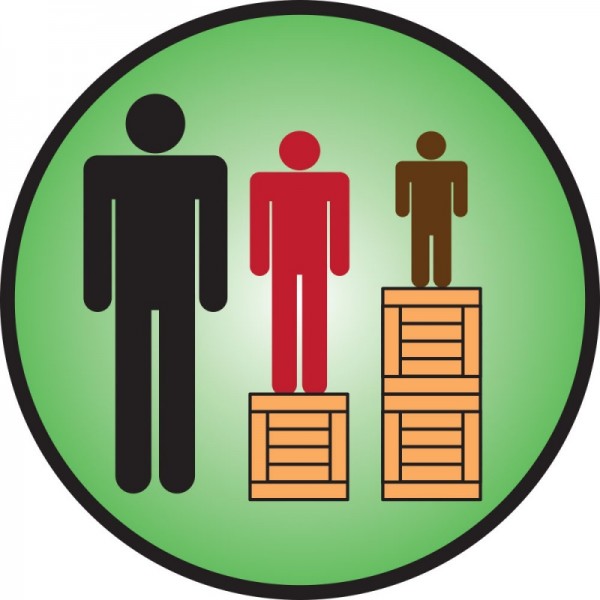
This theme addresses primary issues of discrimination, justice and equity, along with others. The most nuanced of these terms is equity. The readers’ theatre in this theme is dedicated to exploring the differences between equality and equity. Equality is achieved when conditions for people are designed to be the same. This is different than equity, which considers past experiences and other factors that impact a person or group’s ability to reach their own goals. Equity is reached when challenges or barriers that keep people from participating or achieving goals are accommodated or outright removed; it is important that people define goals for themselves or their group.
Owning Reconciliation
The last section of the Treaties level asks learners to work on their own ideas for reconciliation. It places them at the centre of the reconciliation process and asks them to begin to answer the question: what are we doing to reconcile our shared history to ensure justice and equity? Ultimately Treaty Education seeks to grow learners’ skills and confidence to participate in reconciliation as treaty people.
Vocabulary for What is Equity LEs
Discrimination is treatment of a person or group based on their belonging to a specific group such as ethnicity, gender, culture, religion/spirituality, or disability.
Equality is when different groups of people or individuals receive the same treatment. The concept is rooted in the idea of sameness.
Equity is achieved when people and groups have what they need to live and succeed— access to opportunity, networks, resources, and supports. This means the removal or accommodation of any challenges or barriers that keep people from achieving their goals or participating in activities of their own choosing.
Fairness is impartial treatment or a lack of favouritism toward one side or another. The concept dominates many learners’ judgments about good and bad. It often fails to take into account historical differences or other specific barriers.
Justice occurs when an outcome corrects or compensates for a past error or harm. Sometimes justice is framed as a concept of balance: it creates balance in situations that were previously out of balance.
Racism is prejudice, discrimination, or antagonism directed against someone based on the assumption that the way they look is indicative of their abilities or characteristics.
 sharing our stories