What is the Treaty Relationship?
In Mi’kmaw worldview, the original treaties establish relationships among all beings, even all existence. They are commitments to live in ways that honour and support all life—people, plants, animals, and even elements like water, soil and rocks. These treaties pre-date the arrival of Europeans in Mi’kma’kik and are as old as Mi’kma’kik itself.
The Peace and Friendship Treaties between the Mi’kmaq and the Crown were extensions of the original treaties—at least from Mi’kmaw perspectives. They were agreements that established how the Mi’kmaq and the British were going to live in Mi’kma’kik together peaceably. They addressed issues such as Mi’kmaw rights of hunting and gathering, how (some) disputes would be settled, the free movement of the Mi’kmaq, and where British settlements could occur.
Most of all, the treaties established the treaty relationship itself, which both parties committed to in perpetuity. In the words of the treaties, the agreements that framed the relationship were to live on in ‘their heirs and the heirs of their heirs forever.’ Sometimes people think the Peace and Friendship Treaties are about land (as many treaties have been and are today). However, the Peace and Friendship Treaties are not about land. No land was ceded by the Mi’kmaq in these agreements. This is why land acknowledgements speak of ‘unceded territory.’
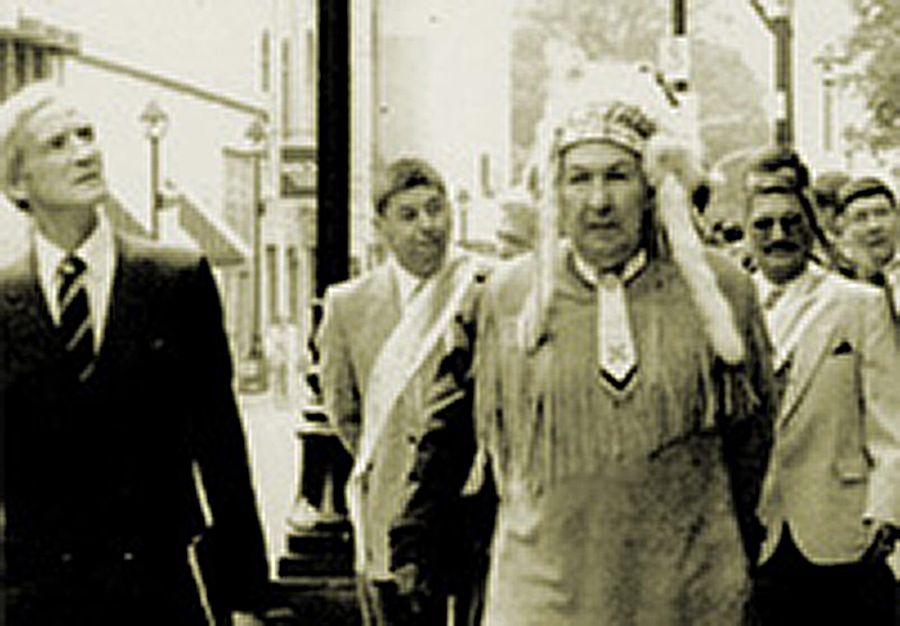
Kji-Saqmaw Donald Marshall Sr. (front right) leads the 1988 Treaty Day parade in downtown Halifax with Mayor Ron Wallace (front left). (Courtesy of Micmac News vol. 18, no. 10, October, 1988, p. 3)
Treaty Day
Treaty Day marks one of the most visible and inclusive events honouring the treaty relationship between the Mi’kmaq and the Crown. It is a day in which learners (and educators!) can participate, activating their own understandings about being treaty people.
As explained in the Treaties level overview, Treaty Day was first envisioned and agreed upon between the Mi’kmaq and the Crown in the 1752- 53 Treaty (see excerpt below). However, this commitment to renew friendship was lost during the Treaty Denial period. It wasn’t until 1986 that Kji-Saqmaw Donald Marshall Sr. invited all Mi’kmaq and the Crown to again honour Treaty Day. Since then, Treaty Day has been celebrated annually in Halifax. It is a time when people come together to become reunited and in some cases reacquainted with each other.
What Happens at Treaty Day?
Treaty Day follows a similar set of events every year, allowing for particular aspects of the treaty relationship to be highlighted and honoured. A typical schedule includes:
- A cultural showcase on the night before Treaty Day.
- A flag raising ceremony at Government House.
- A church service at St. Mary’s Cathedral Basilica.
- A Veterans’ Parade of Honour at the Parade Square.
- A Flag-raising Ceremony at Grand Parade.
- An Awards Ceremony and remarks that includes a feast.
These elements of the celebration allow the Mi’kmaq and the Crown to acknowledge important aspects of the treaty relationship. The day also allows people to come together to reflect on the current state of the treaty relationship. It is a touchstone for both the Mi’kmaq and the Crown to reflect upon their own actions, as well as the actions of the other, in sustaining this important friendship.
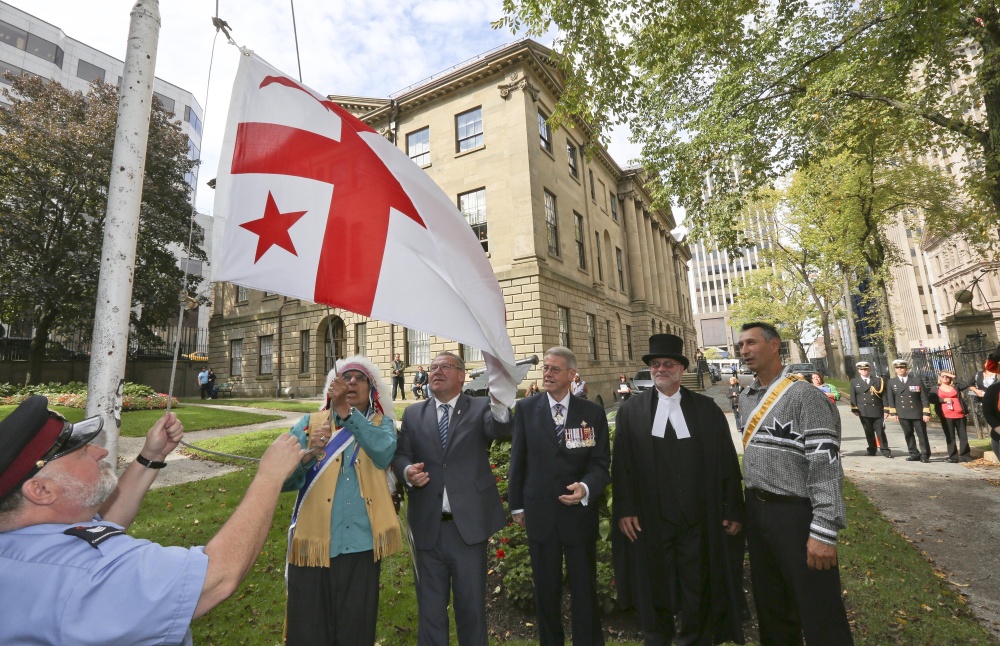
Kji-Saqmaw Ben Sylliboy (second from left) and Kji-Keptin Antle Denny (end right) participate in the flag-raising ceremony on Treaty Day in Halifax, 2012. (Courtesy of Len Wagg, Communications Nova Scotia, October 1, 2012)
The LEs in this section are designed for learners to participate in Treaty Day even if they cannot attend the events taking place in Halifax. The LEs can be augmented, of course, with in-person visits to Halifax or by watching live streams of the day’s events.
For many Mi’kmaq, Treaty Day is a time to give thanks for the Peace and Friendship Treaties and for the generations who worked to keep the treaty relationship alive. The two treaty partners still exchange gifts, and renew their commitments for friendship for future generations.
The Kji-Keptin’s Treaty Day Speech
Each year the Kji-Keptin of the Sante’ Mawio’mi gives a speech at Treaty Day. This is a very important moment in the relationship between the Mi’kmaq and the Crown. In the speech the Kji-Keptin reflects on the state of the treaty relationship over the preceding year and looks forward to the future. The speech is part of the honest and respectful= sharing that is part of any healthy relationship.
The speech honours the roles of both orality and leadership in the Mi’kmaw culture. Kji-Keptins are great orators, and their speeches are a key part of the oral traditions of the Mi’kmaw Nation. Many Mi’kmaq (and others) know that there would be no Treaty Rights and no treaty relationship without Mi’kmaw oral tradition. It is this oral tradition that has kept the treaty relationship alive since the 1700s when the Peace and Friendship Treaties
were signed. Educators and learners can find more about the importance of this speech, and consider what it means to take care of the treaty relationship this way in LE RR4: Etlita’suwaltultimk.
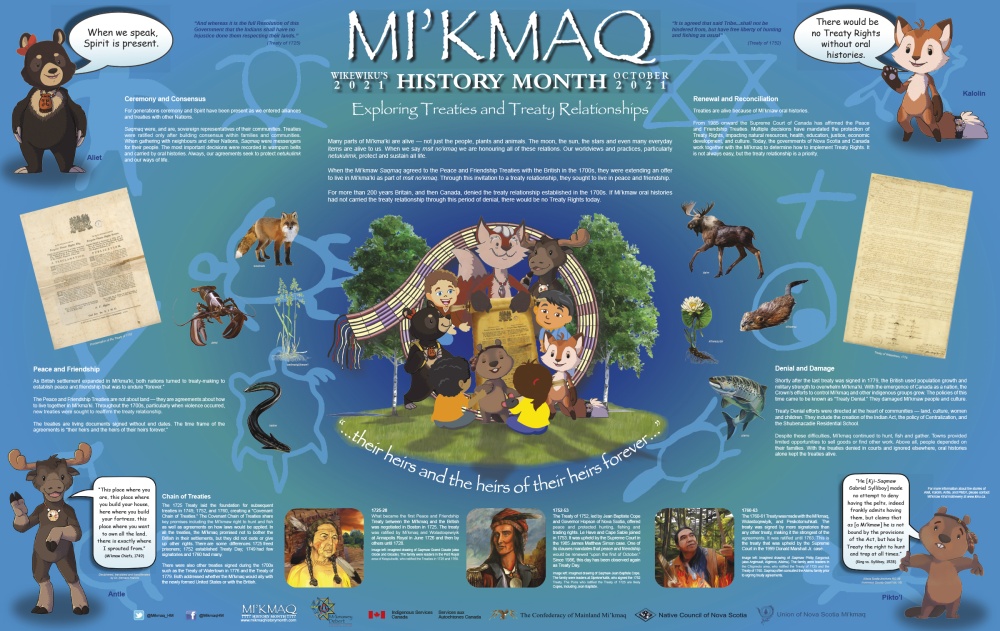
Treaty Day was officially established with the 1752-53 Treaty. The 2021 Mi’kmaq History Month poster is a great resource for exploring this treaty and many others. Educators can also revisit the Treaties level of Roots of Reconciliation to prepare for Treaty Day!
What Did 1752-53 Treaty Say About Treaty Day?
It’s true that Treaty Day started with the 1752-53 Treaty, and even marked October 1st as the day to renew the friendship between the Mi’kmaq and the Crown. Take a look:
That to cherish a good harmony and mutual Correspondence between the said Indians and this Government His Excellency Peregrine Thomas Hopson Esq. Capt. General & Governor in Chief in & over His Majesty’s Province of Nova Scotia or Acadie Vice Admiral of the same & Colonel of One of His Majesty’s Regiments of Foot hereby promise on the part His Majesty that the said Indians shall upon the First Day of October Yearly so long as they shall Continue in Friendship Receive Presents of Blankets, Tobacco, some Powder & Shot, and the said Indians promise once every year upon the first of October to come by themselves or their Delegates and Receive the said Presents and Renew their Friendship and Submissions.
 sharing our stories