Treaty Renewal (c. 1985 to present)
The renewal of the treaty relationship between the Mi’kmaq and the Federal and Provincial governments has been a defining period in Canada’s history. Rather than an exact year, or even decade, Treaty Renewal is marked by the growing empowerment and self-determination of the Mi’kmaw Nation.
Community organizations, led by the Union of Nova Scotia Indians (now the Union of Nova Scotia Mi’kmaq) in the 1970s, began to articulate and push for Mi’kmaw sovereignty and equity for the Nation. Land claims, and the formation of organizations like the Nova Scotia Native Women’s Association, the Native Council of Nova Scotia, and the Micmac Association of Cultural Studies were all early efforts to move the Nation toward a larger goal of renewing the treaty relationship.
Legal Success and Changing Dynamics
A series of monumental developments in the 1980s secured a new era through which the Mi’kmaq continued to seek a renewed treaty relationship with the Federal and Provincial governments. The 1982 repatriation of the Constitution enshrined Treaty and Aboriginal Rights in modern law through Section 35 of the Constitution Act, which recognized and affirmed Treaty Rights. Section 52 of the Act made the treaties part of the supreme law of Canada. Section 25 of the Canadian Charter of Rights and Freedoms also protected Treaty Rights from being infringed upon by the private rights of Canadians. This was a watershed moment where the rights and responsibilities embedded in the 18th century treaties would no longer be a responsibility of the British Crown. Instead, they became constitutional responsibilities of the Government of Canada and its provinces.
The 1985 James Matthew Simon case (R v. Simon) was the first modern Supreme Court decision to affirm the Peace and Friendship Treaties. It was followed by affirming decisions in R v. Marshall (1999) and R v. Bernard (2005), as well as others. These Supreme Court of Canada decisions, along with other related cases, changed the way people across Canada understood treaty rights and obligations. Here in Mi’kma’kik, the cases changed the way that Mi’kmaw and non-Mi’kmaw individuals and organizations interacted in the public sphere.
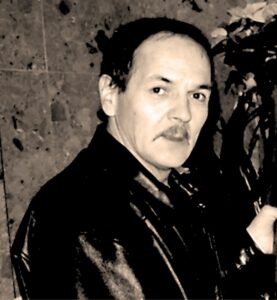
Donald Marshall Jr. was charged with fishing for eel out of season in 1993. His appeal of this charge, rooted in the knowledge that the Peace and Friendship Treaties protected Mi’kmaw rights to fish led to the groundbreaking Marshall decision in 1999, which affirmed these treaty rights. (Courtesy of Mi’kmaq-Maliseet Nations News)
A series of national and provincial commissions and inquiries have worked alongside these Supreme Court decisions to challenge Canadians to work towards equity with indigenous peoples on matters of land, water, natural resources, ancestral places, health, education, justice, economic development, culture, language, and governance. The Royal Commission on the Donald Marshall Jr. Prosecution, the Royal Commission on Aboriginal Peoples (RCAP), and the Truth and Reconciliation Commission (TRC) have laid out frameworks,
identified key issues, and made recommendations that continue to affirm Mi’kmaw efforts to seek justice and equity from the harms of the Treaty Denial period.
Consultation and the Duty to Consult
Today, the Crown—represented by the Federal and Provincial governments—works together with the Mi’kmaq to determine how best to implement Treaty Rights. It is not always an easy process, but the parties have remained committed to this tri-lateral process. Consultation is required when Federal and Provincial actions or decisions impact Treaty Rights. The consultation process brings all parties to the table through sanctioned representatives to discuss the priorities of those involved. If Treaty Rights are impacted, then everyone works together to find an acceptable solution. All parties have both responsibilities and rights in this negotiation process. Ultimately, governments seek long-term solutions that are acceptable to all.
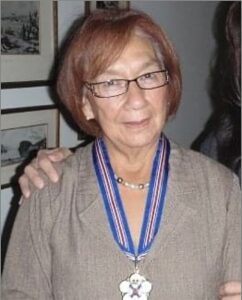
Dr. Viola Robinson has been a long-time champion for Mi’kmaw treaty rights, (among other important initiatives like Mi’kmaw women’s rights). She was the president of the Native Council of Nova Scotia from 1975 to 1990, a Commissioner on the Royal Commission on Aboriginal Peoples, as well as the Lead Negotiator for Kwilmu’kw Maw-klusuaqn from 2011-2021. (Courtesy of Viola Robinson)
Generations of Effort
Treaty Renewal has grown through the efforts of many people across a myriad of organizations. Akin to reconciliation, it has required the work of people across communities and sectors to make it a reality. If Treaty Denial is defined by the loss and damage of land and water, children and education, health and well-being, and community and identity, then the Treaty Renewal period has seen growing strength and independence in these same areas.
There are a great many issues facing contemporary communities. The Treaty Rights process is just one pathway through which people are seeking greater equity for Mi’kmaw people as well as for other indigenous people in Canada. As Canadian society moves forward, learners will increasingly be asked to understand the realities of the modern treaty relationship in many personal and professional contexts. The more they understand the context of the relationship, the stronger it will be.
Are Treaty Rights and Aboriginal Rights Different?
Yes! Aboriginal Rights and Treaty Rights are different kinds of rights. Aboriginal Rights come from the fact that indigenous people were here for thousands of years before Europeans and other newcomers arrived. Aboriginal Rights are general in nature and they are said to “flow” from this historical reality. Treaty Rights are specific rights guaranteed at one time or another within the treaty relationship. For example, fishing is part of the Mi’kmaw and British Peace and Friendship Treaties, but fishing is not necessarily guaranteed to all indigenous people just because they are indigenous.
Key Developments in Renewal and Reconcilliation
1969 The Union of Nova Scotia Indians forms, followed by the Nova Scotia Native Women’s Association and the Micmac Association of Cultural Studies in 1972, and the Native Council of Nova Scotia in 1975.
1973 The Supreme Court of Canada recognizes the existence of Aboriginal Title for the first time in Calder et al. v. Attorney-General of British Columbia.
1977 A position paper on the Aboriginal Rights of the Mi’kmaq is presented to the Government of Canada. In it, the Nation makes its case for Aboriginal Rights in Mi’kma’kik.
1982 Treaty and Aboriginal Rights are recognized in Section 35 of the Constitution Act.
1985 R v. Simon affirms the validity of the 1752-53 Treaty. This is the first Supreme Court of Canada decision to affirm Mi’kmaw treaties with Canada.
1986 The Confederacy of Mainland Mi’kmaq forms to promote the interests of mainland Mi’kmaq in Nova Scotia.
1986 The Royal Commission on the Donald Marshall Jr. Prosecution is established. Its 1990 final report highlights widespread discrimination in the Nova Scotia justice system.
1986 Kji-Saqmaw Donald Marshall Sr. named October 1st Treaty Day, resurrecting the 1752 Treaty promise between the Mi’kmaq and the British “to renew their friendship” annually in October.
1991 The Royal Commission on Aboriginal Peoples (RCAP) forms in response to the Oka Crisis. Five years later in 1996, the RCAP would make recommendations across sectors for the improvement of the lives of indigenous people in Canada, most of which would be left unrealized.
1997 The Supreme Court of Canada confirms in R v. Delgamuukw that oral histories and traditions are legally valid demonstrations of the existence of Aboriginal Title.
1998 The Mi’kmaw Education Act transfers education authority to Mi’kmaw First Nation communities. Mi’kmaw Kina’matnewey forms to educate youth.
1999 R v. Marshall affirms Mi’kmaw rights from the 1760-63 Treaty to hunt and to fish for a moderate livelihood.
1999 In response to the 1994 Task Force on Museums and First Peoples, a Memorandum of Association concerning Mi’kmaw heritage is signed by Federal and Provincial governments.
2002 The Mi’kmaq, and Federal and Provincial governments sign an “umbrella agreement” for the implementation of Treaty Rights.
2003 Kwilmu’kw Maw-klusuaqn/Mi’kmaw Rights Initiative forms to implement Aboriginal and Treaty Rights across Nova Scotia. In time, Membertou, Millbrook and Sɨpekne’katik First Nations will negotiate their own rights as individual bands.
2010 The Truth and Reconciliation Commission (TRC) forms in response to a class-action lawsuit filed by survivors against the Government of Canada. In 2015, the TRC publishes 94 Calls to Action and finds that Canada’s actions regarding the residential school system amounted to cultural genocide.
2016 Treaty Education Nova Scotia is launched to provide opportunities to learn about the Mi’kmaq and the Peace and Friendship Treaties.
2016 The Canadian Human Rights Tribunal determines that Health Canada’s services for First Nations children were discriminatory. They use “Jordan’s Principle” to create change.
2017 A “free pardon” is granted to Kji-Saqmaw Gabriel Sylliboy, exonerating him from the 1928 Nova Scotia Supreme Court conviction for hunting out of season. It is the second free pardon in the history of the Province.
Teacher Tip
Treaties are important to consider when thinking about the future, especially for younger
learners. Some people believe that treaty education is only historically- oriented. Not so! All Nova Scotians and Canadians will require a thorough understanding of reconciliation and its roots in the treaty relationship. The duty to consult engages nearly every sector of Canadian life—forestry, commerce, fishing, education, and health. Jobs in any of these sectors require these fundamentals.
 sharing our stories