
Getting Acquainted
This section provides basic content for learners who have no familiarity with treaties. The following Learning Experiences (LEs) are intended to place the 18th century Peace and Friendship Treaties between the Mi’kmaq and the British in a wider historical and political context. Treaties, which are agreements among nations, have been made since time immemorial across every continent and country in the world.
If learners understand that Canada has entered into treaties with many countries for many reasons since Confederation in 1867, it will help them see themselves as treaty people. Canada continues to enter into treaties and international partnerships, such as the Trans Pacific Partnership (2016).
The theme starts with a Learning Experience that strengthens primary treaty vocabulary (see some examples in the overview of this level). These terms will be revisited throughout the other Treaties sections: Treaty-Making and Treaty Denial.
Treaties come about as a tool when any nation seeks peace. The alternative to peace is, of course, war. One of the LEs (T2) helps learners consider why any nation might choose war. Many nations will choose war when they feel they have no other choice. During World War II, nations went to war because they believed it was the only way to fight Nazi Germany and the rise of fascism in the early 20th century. Similarly, both the British and the Mi’kmaq had their own reasons for choosing conflict two centuries earlier.
The last Learning Experience in this (short) theme is a puzzle that is a fun activity for learners to absorb and further play with broader treaty concepts.
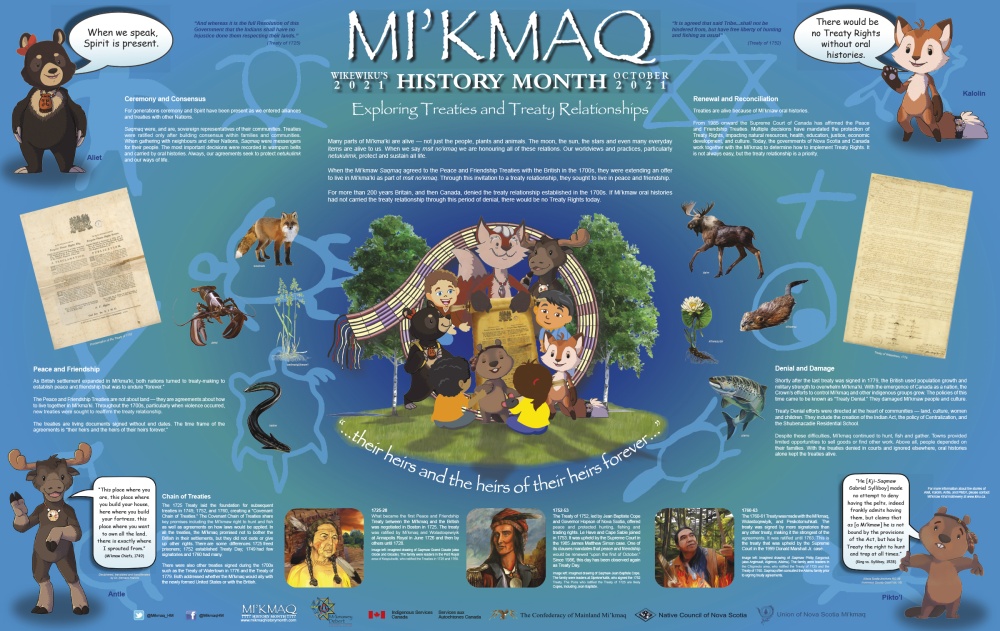
The 2021 Mi’kmaq History Month poster is a great resource for learning more about the treaties themselves and why they’re so important.
Peace and Friendship Treaties: Distinctions
The 18th century Peace and Friendship Treaties differ from most modern treaties in that they were agreed to in perpetuity. The 1752 (ratified to 1753) and 1760 (ratified to 1763) treaties were agreed to on behalf of the British and Mi’kmaw “heirs and the heirs of their heirs forever…”. Modern treaties have timelines requiring renewal.
Treaties with the British became treaties with Canada when the Constitution was repatriated to Federal and Provincial legislatures in 1982. The Charter of Rights and Freedoms was amended to the Constitution at the same time.
Educators and learners will find that all LEs in this section emphasize that the Peace and Friendship Treaties were never about land. This repetition is intended to counter pervasive misconceptions about Mi’kmaq ceding land to the British.
 sharing our stories